Embraer Phenom 100
Embraer Phenom 100 - Description
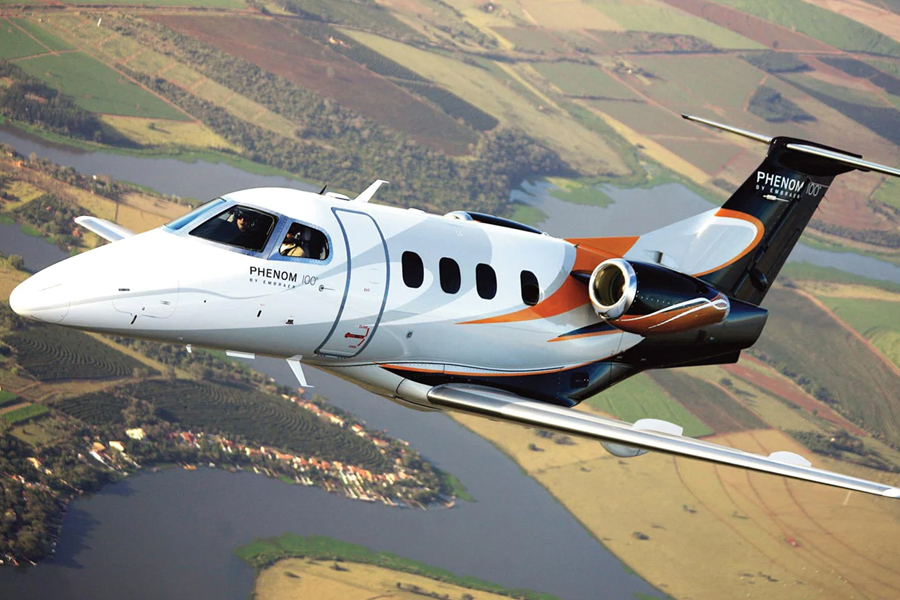
Made by one of the largest aircraft manufacturers in the world, Brazil-based Embraer, the Phenom 100 is a very light twin engine jet. Able to accommodate four passengers and a single pilot, this small private jet is ideal for individuals or small companies.
The Phenom 100 has a comfortable range of 1,160 nautical miles and can climb to 37,000 feet in just 23 minutes.
The Phenom 100 is also powerful. Two Pratt and Whitney PW617F-E engines power the Phenom 100, providing a thrust for takeoff of 1,695 pounds each. These engines employ a FADEC (Full Authority Digital Electrical Control) system, making them extremely efficient and simple in flight. The engine inspection interval is 3,500 hours.
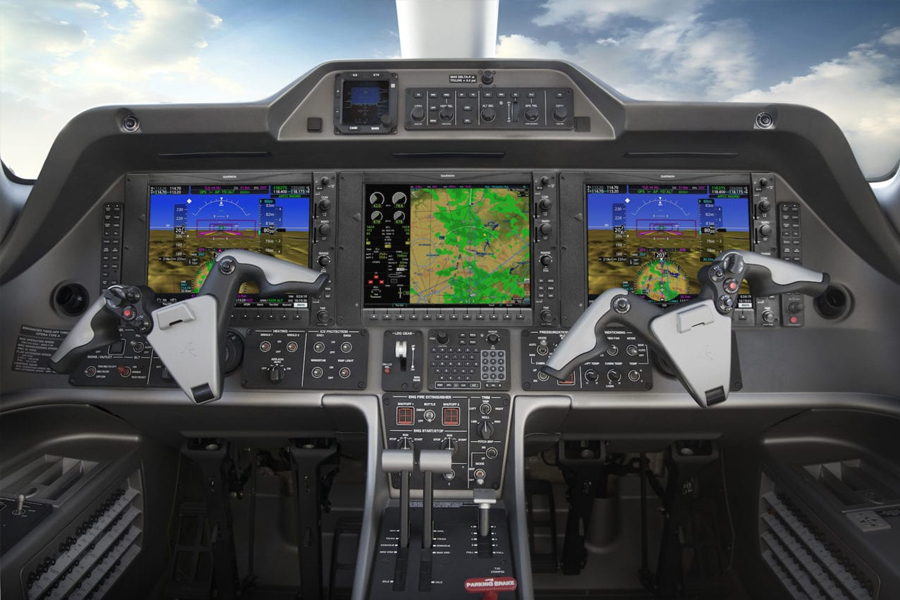
Based on Garmin’s G1000, the Phenom 100’s Embraer Prodigy all-glass avionics suite features three displays: two primary flight displays (PFD) and one multi-function display (MFD). All information is integrated onto high-definition/color resolution screens. The system is built with the pilot in mind, placing all aircraft monitoring, situational awareness and flight-planning tools at their fingertips. The GFC 700, an innovative Automatic Flight Control System (AFCS), is the Phenom’s fully digital, dual channel, three-axis autopilot system.
It may be classified as a very light private jet, but the Phenom 100 is competitive with larger private jets in performance and space. Its high speed cruise of 380 knots true airspeed trumps all close competitors.
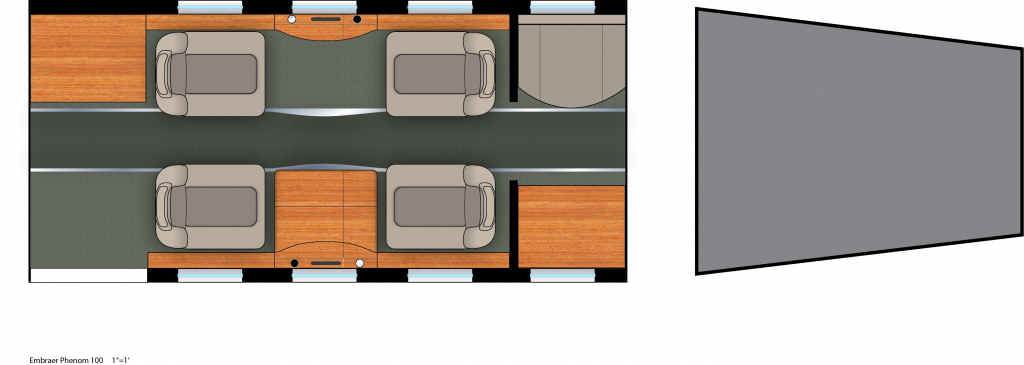
The interior of the Phenom 100 is surprising for its size as well. Measurements are 11 ft long, 4’11’’ high and 5’1’’ wide. The jet boasts 305 cubic feet of total cabin volume and 55 cubic feet of baggage capacity.
The design of the cabin is comfortable and aesthetically pleasing. It features large leather seats that include arm rests, power outlets and multiple controls at you fingertips, and nice-looking wood finishing that is consistent throughout. The Phenom’s interior can be configured using seven pre-defined factory options.
Being a very light private jet, the Phenom 100 offers much of the same capabilities and characteristics that are specific to a class higher, but still at a fraction of the cost. For small companies traveling short distances, the Phenom 100 is a great value.
- Interior
- Exterior
- Cockpit
- Cabin